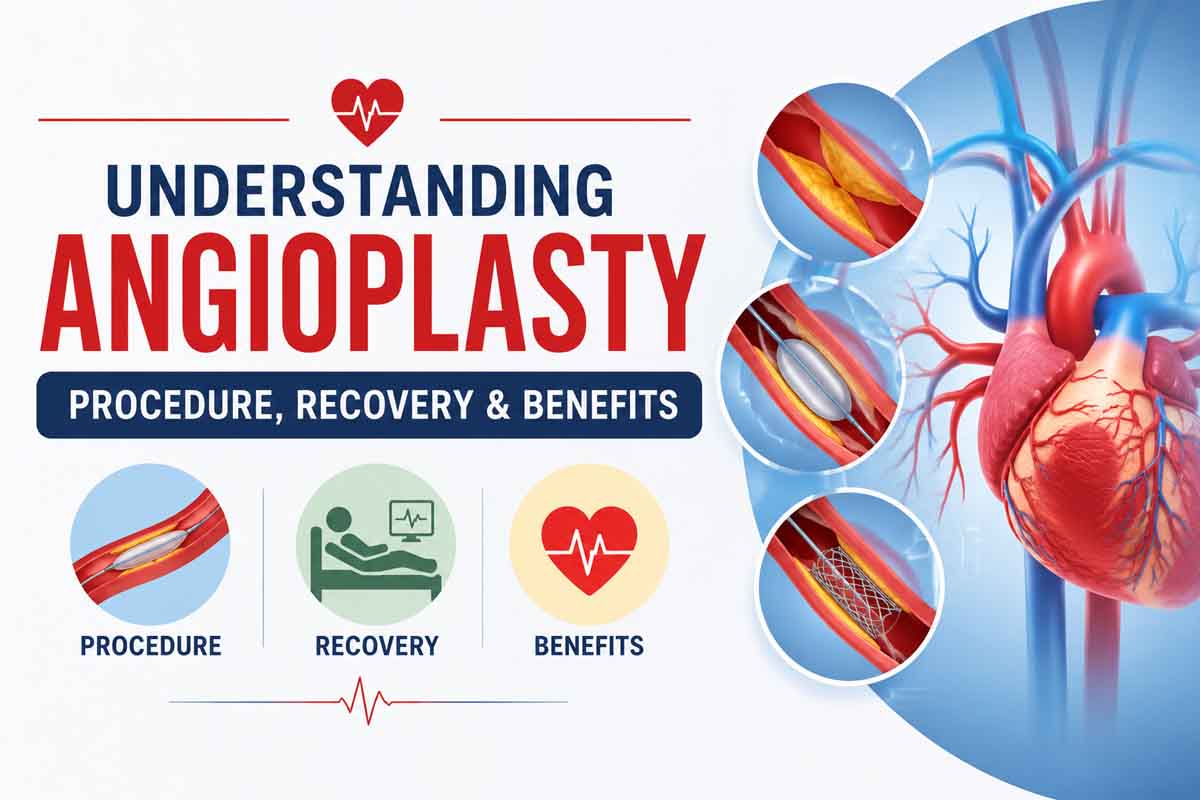
Understanding Angioplasty - Procedure, Recovery & Benefits
Angioplasty is a commonly performed minimally invasive procedure used to restore blood flow through narrowed or blocked arteries. It is often recommended for patients with coronary artery disease, a condition caused by the buildup of plaque inside the arteries supplying blood to the heart. By improving blood circulation, angioplasty can relieve symptoms, enhance heart function, and reduce the risk of serious cardiovascular events.
What Is Angioplasty?
Angioplasty, also known as Percutaneous Coronary Intervention (PCI), is a procedure that opens blocked or narrowed coronary arteries. During the procedure, a cardiologist inserts a thin catheter with a small balloon at its tip into a blood vessel, usually through the wrist or groin. The balloon is inflated at the blockage site to widen the artery and restore blood flow.
In most cases, a stent—a small mesh tube—is placed inside the artery to help keep it open and reduce the chances of future narrowing.
Why Is Angioplasty Performed?
A cardiologist may recommend angioplasty for patients who experience:
- Chest pain (angina)
- Shortness of breath
- Coronary artery disease
- Reduced blood flow to the heart
- Heart attack requiring emergency treatment
The procedure helps improve oxygen supply to the heart muscle and can significantly enhance a patient’s quality of life.
How Is the Procedure Performed?
The angioplasty procedure generally follows these steps:
1. Preparation
The patient receives local anesthesia and mild sedation. The insertion area is cleaned and prepared.
2. Catheter Insertion
thin catheter is guided through a blood vessel toward the blocked coronary artery using real-time imaging.
3. Balloon Inflation
Once positioned, the balloon is inflated to compress plaque against the artery walls and widen the passage.
4. Stent Placement
A stent is often deployed to support the artery and maintain blood flow.
5. Completion
The balloon and catheter are removed, while the stent remains in place permanently.
Most angioplasty procedures take between 30 minutes and 2 hours, depending on the complexity of the blockage.
Recovery After Angioplasty
Recovery is usually faster than traditional open-heart surgery. Most patients can return home within one or two days.
Recovery Tips:
- Follow prescribed medications carefully
- Avoid strenuous activities for a few days
- Maintain a heart-healthy diet
- Attend follow-up appointments
- Stop smoking if applicable
- Participate in cardiac rehabilitation if recommended
Patients often notice improvement in symptoms such as chest pain and breathlessness soon after the procedure.
Benefits of Angioplasty
Angioplasty offers several important advantages:
Improved Blood Flow
The procedure restores proper circulation to the heart muscle.
Relief from Symptoms
Many patients experience significant reduction in chest pain and improved exercise tolerance.
Reduced Heart Attack Risk
By opening blocked arteries, angioplasty helps lower the risk of future cardiac events.
Minimally Invasive Approach
Unlike bypass surgery, angioplasty requires only a small puncture rather than a large surgical incision.
Faster Recovery
Most patients recover quickly and resume normal activities sooner than with open-heart procedures.
Are There Any Risks?
Although angioplasty is generally safe, potential risks include:
- Bleeding at the catheter insertion site
- Blood clots
- Re-narrowing of the artery
- Allergic reaction to contrast dye
- Rare complications such as heart attack or stroke
Your cardiologist will evaluate your individual risk factors before recommending the procedure.
Angioplasty is an effective and widely used treatment for blocked coronary arteries. It can relieve symptoms, improve heart function, and reduce the risk of serious cardiovascular complications. Understanding the procedure, recovery process, and benefits can help patients make informed decisions about their heart health. If you are experiencing symptoms of coronary artery disease, consult a qualified cardiologist to determine whether angioplasty may be the right treatment option for you.